
Hike Safe
A little planning before you leave the trailhead is the cheapest insurance in the backcountry. Prepare, pack, and tell someone where you're going so a day in the Huachucas or Chiricahuas stays a good story — not a search.
Pack smart, hike safe.
Plan, Prepare, Pack — plus the ten essentials to carry every time, at a glance. Save it to your phone before the trailhead.
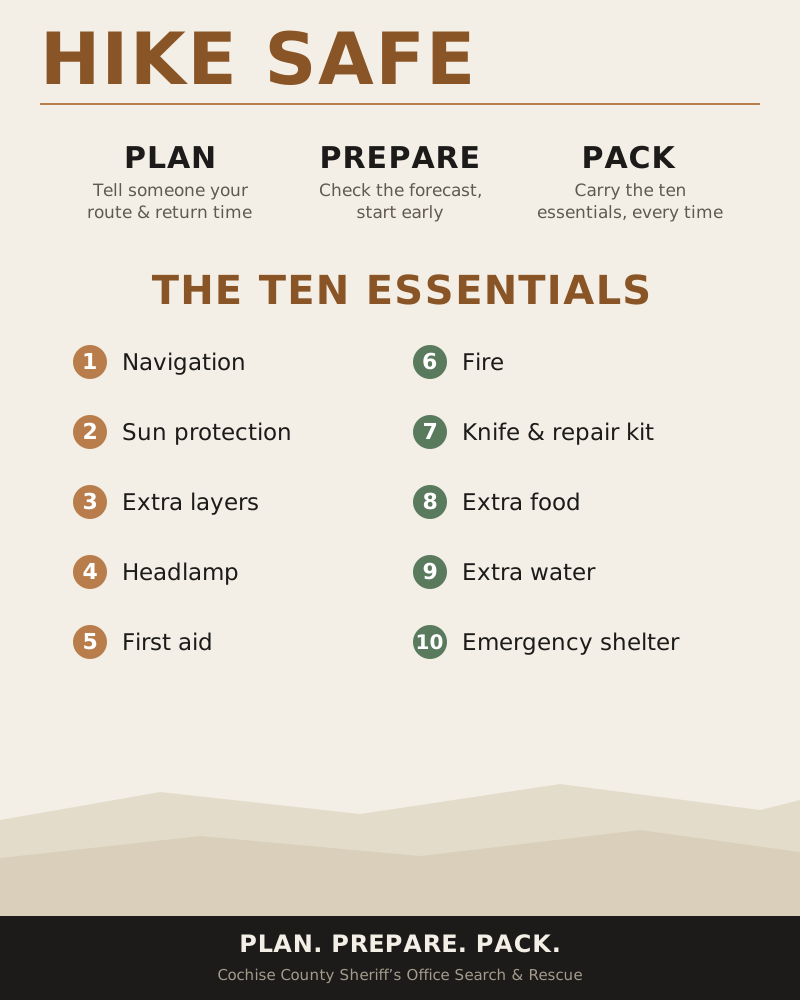
Plan · Prepare · Pack
Plan
Tell someone your exact route and your return time — then stick to it. Cell coverage drops to nothing across most of our ranges, so the person at home is your first link to help. If you're not back when you said you would be, that timeline is what gets a team moving.
Prepare
Check the forecast for both the trailhead and the high country, and know your limits. Summer heat above 100°F and afternoon monsoon storms can turn a routine hike dangerous fast. Start early, beat the heat, and turn around before you're out of daylight or water.
Pack
Carry the ten essentials every time, even on a short loop. The desert is unforgiving of "I'll be fine" — an extra liter of water, a headlamp, and a way to call for help are what turn a wrong turn into an inconvenience instead of an emergency.
What to carry, every time
This is the standard list search and rescue teams swear by. In Cochise County terrain — exposed ridgelines, fast-moving monsoon storms, and miles between water sources — every item earns its place in your pack.
- Navigation — map, compass, and a GPS or phone with offline maps; don't count on cell signal.
- Sun protection — hat, sunglasses, and sunscreen; the Arizona sun is relentless year-round.
- Extra layers — temperatures fall fast after dark and at higher elevation, even after a scorching day, so pack a warm layer.
- Illumination — a headlamp with spare batteries; dusk comes faster than you think on the trail.
- First-aid supplies — a kit you know how to use, with blister care plus bandages and antiseptic for cleaning and covering minor cuts and scrapes.
- Fire — lighter or matches and a firestarter for warmth or signaling.
- Repair kit and tools — knife, duct tape, and a multi-tool for gear failures in the field.
- Extra food — more than you plan to eat, in case the trip runs long.
- Extra water — and the means to treat more; plan a gallon a day per person in summer heat and carry beyond that.
- Emergency shelter — a bivy, space blanket, or tarp to wait out a storm or an unplanned night.
Hiking our deserts and mountains
Cochise County backcountry has its own rules — extreme heat, scarce water, flash-flood washes, and monsoon lightning. Learn the local specifics before you head out so the terrain works with you, not against you.